Stress urinary incontinence (SUI) is a prevalent and debilitating condition in women. Since its introduction in 1996, the Tension-free Vaginal Tape (TVT) procedure has been a cornerstone in SUI treatment, with high cure rates in the short and long term.(1) However, synthetic slings carry risks of complications, including mesh erosion, bladder injury, voiding dysfunction, and de novo overactive bladder (OAB).(2) This has raised safety concerns despite their proven effectiveness.
Patients performing intermittent self-catheterization (ISC) or with previously failed synthetic sling surgery are at higher risk of postoperative mesh erosion when a new TVT sling is placed.(3) Hybrid sling techniques, combining autologous fascia with lateral arms of synthetic mesh, have been developed to reduce these risks while preserving effectiveness. This retrospective study presents short-term outcomes of TVT-hybrid sling surgery in patients with elevated risk of mesh-related complications.
In a retrospective, monocentric study — approved by the ethics committee — data were analyzed from women who underwent TVT-hybrid sling surgery as treatment for SUI between January 2024 and October 2025. The procedure is performed in a standardized manner using a 4 × 2 cm segment of tensor fascia lata tendinous tissue, harvested via a 4 cm incision on the lateral thigh, 10 cm above the lateral condyle of the tibia. The autologous graft is secured to a synthetic TVT mesh using four non-absorbable polypropylene sutures. The hybrid construct is then placed according to standard TVT surgical technique, maintaining a tension-free position and ensuring that the autologous portion is positioned on the urethral side. Postoperatively, surgical success is defined as improvement in subjective SUI symptoms (assessed via a Urinary Distress Inventory questionnaire) or an objective reduction in the number of incontinence pads required per day.
This analysis includes a 20 patients with preoperative characteristics shown in Figure 1. Overall, 25.0% of patients were already performing ISC with median frequency of 5 catheterizations/day (IQR 4–7), and 50.0% demonstrated detrusor hypocontractility on urodynamic evaluation. Perioperative data (Figure 1) show a median operative time of 70 minutes (IQR 55–94), decreasing from 95 minutes to 48 minutes in the most recent cases. At the first postoperative consultation (Figure 2), with a median follow-up of 5 weeks (IQR 4–6), improvement in SUI symptoms was observed in 85% of patients, and a reduction in daily pad usage was demonstrated in 55.0% of cases. Median catheterization frequency also decreased to 4 per day (IQR 3–5). Postoperative irritative lower urinary tract symptoms (LUTS) were present in 50% of patients, all of whom had preoperative mixed incontinence. A suprapubic catheter was placed in 2 patients due to an unforeseen inability to perform self-catheterization postoperatively, unrelated to the procedure itself.
In a subgroup of these patients (n = 16), a second postoperative consultation was available for analysis (Figure 2), with a median follow-up of 22 weeks (IQR 15–52). Improvement in SUI symptoms relative to baseline was reported in 86.7%. Median catheterization frequency further decreased to 3 per day (IQR 2–4), with 1 patient developing de novo urgency symptoms. In 1 patient, the suprapubic catheter was removed and ISC was subsequently initiated.
These interim findings suggest a favorable efficacy and safety profile of TVT-hybrid sling surgery, with sustained SUI improvement across short- and long-term follow-up timepoints. Reduction in median operating time, without negative effect on efficacy of the procedure, highlight a rapid learning curve.
The TVT-hybrid sling is a promising treatment option for SUI in patients at elevated risk of synthetic mesh erosion. This technique results in a reduction in SUI symptoms and a decreased ISC frequency. Prospective studies with longer follow-up are needed to confirm these findings and to further optimize patient selection.
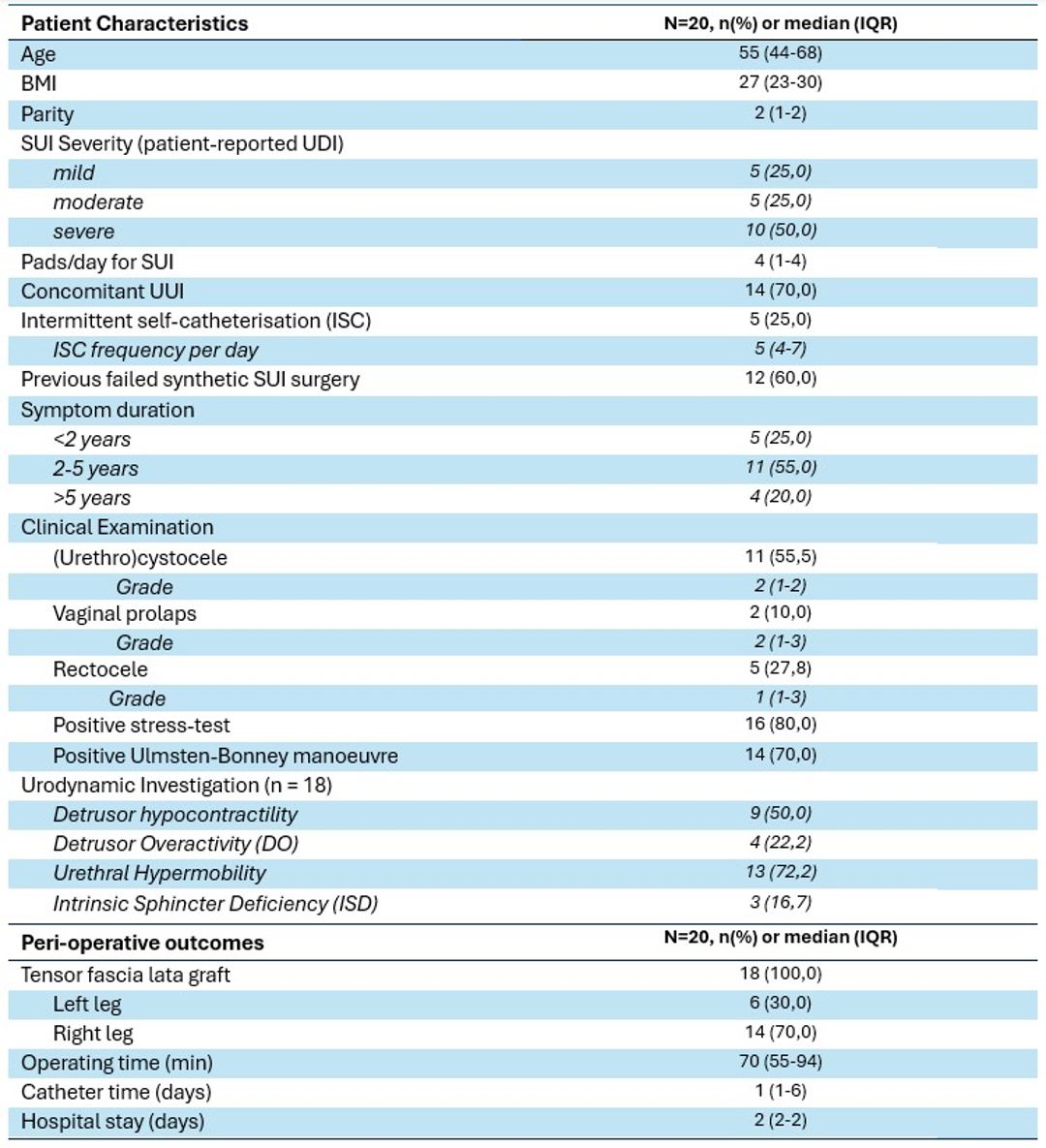 Patient characteristics and peri-operative outcomes
Figure 2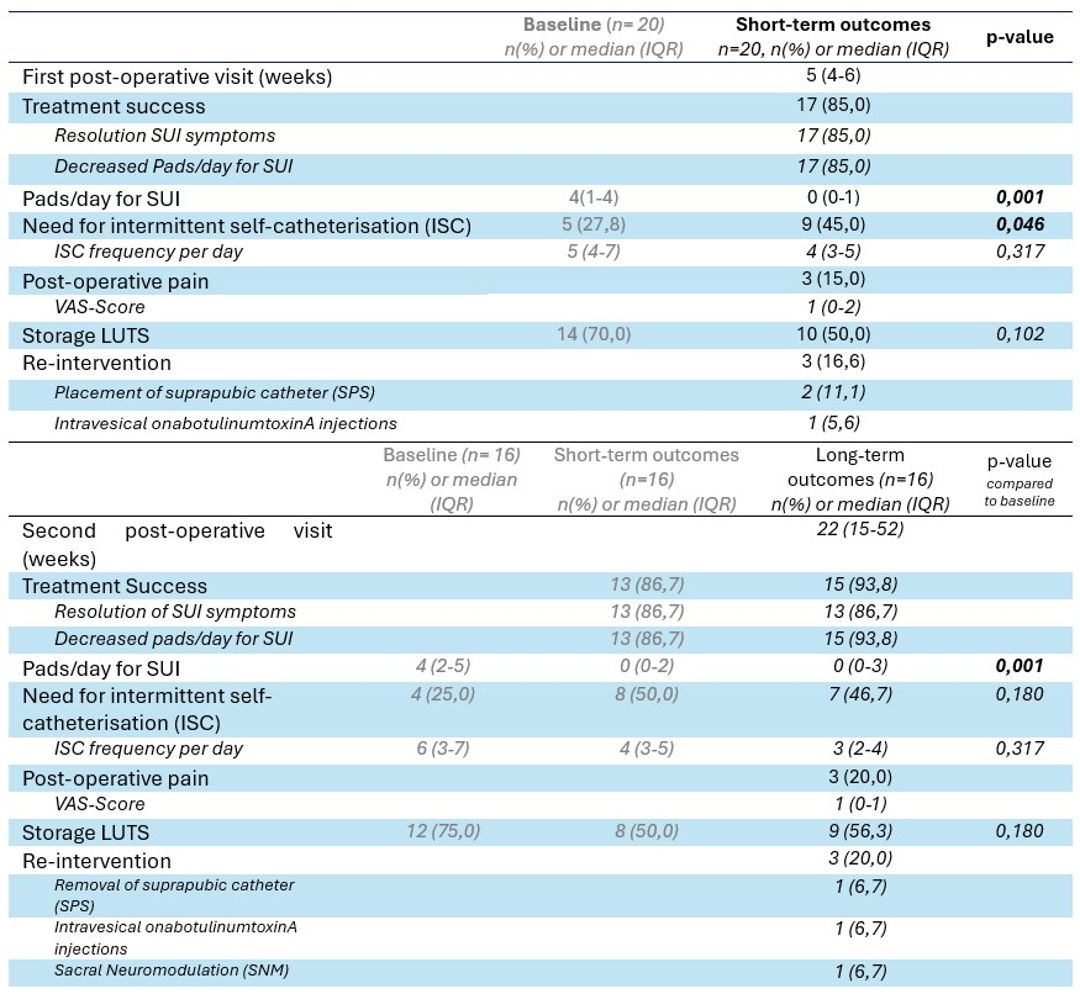 Post-operative outcomes
Ulmsten U. An Introduction to Tension-Free Vaginal Tape (TVT) – A New Surgical Procedure for Treatment of Female Urinary Incontinence. Int Urogynecol J. 2001 Jun;12(S2):S3–4.
Pergialiotis V, Mudiaga Z, Perrea DN, Doumouchtsis SK. De novo overactive bladder following midurethral sling procedures: a systematic review of the literature and meta-analysis. Int Urogynecol J. 2017 Nov 5;28(11):1631–8.
Haudebert C, Richard C, Common H, Hascoet J, Bentellis I, Freton L, et al. Bandelette aponévrotique pubovaginale pour incontinence urinaire d’effort chez les femmes à risque de complications prothétiques. Progrès en Urologie. 2022 Jul;32(7):500–8.